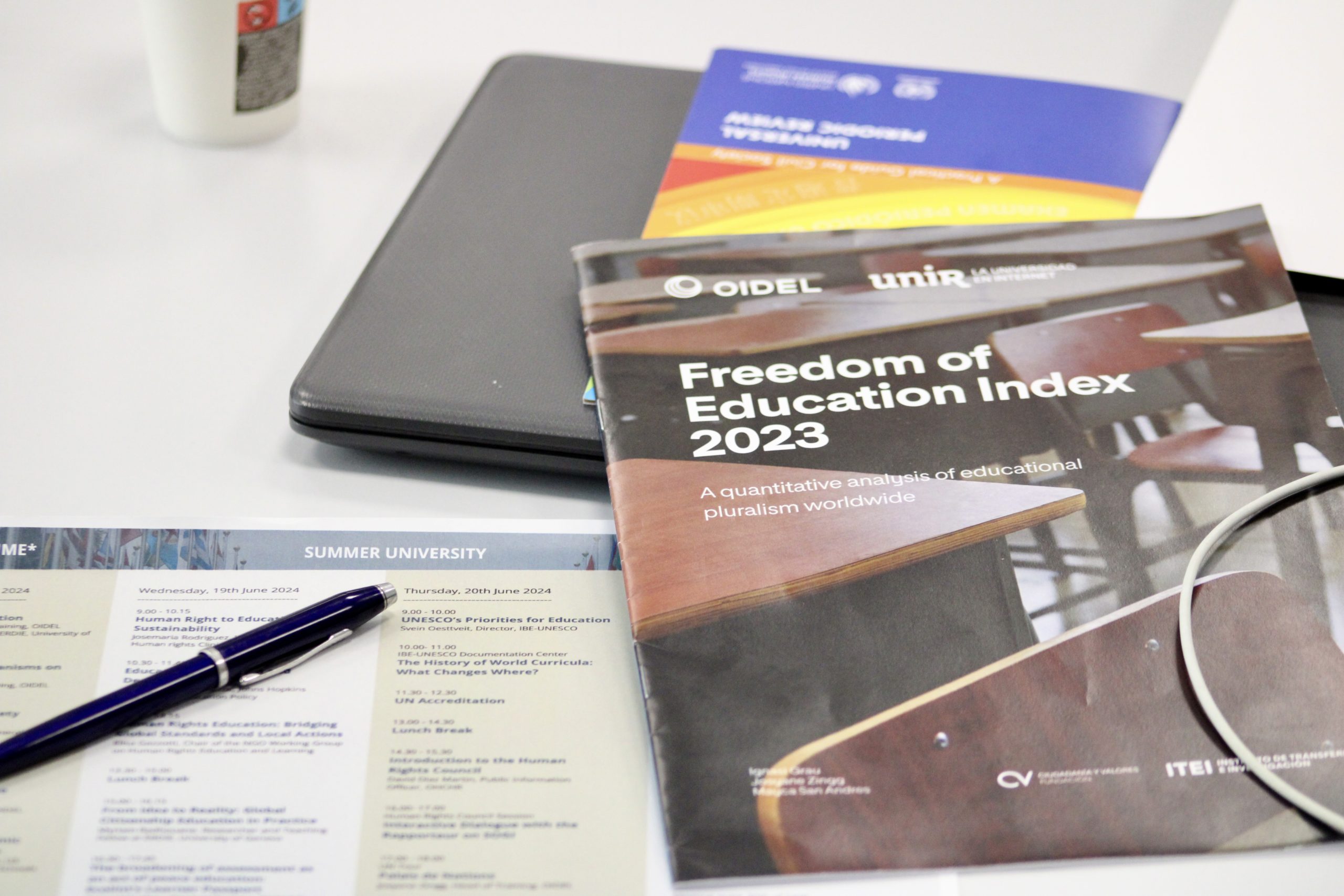


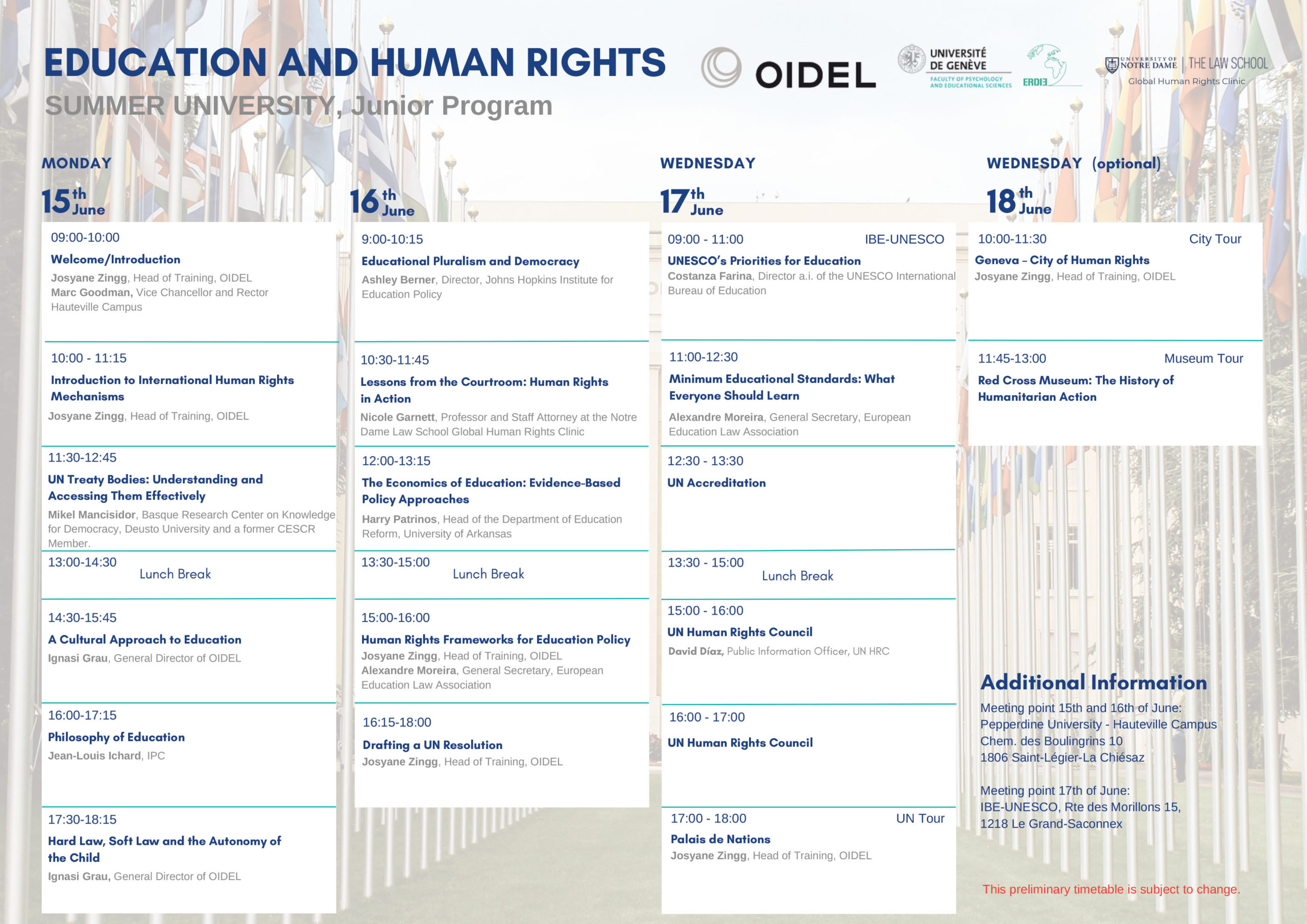
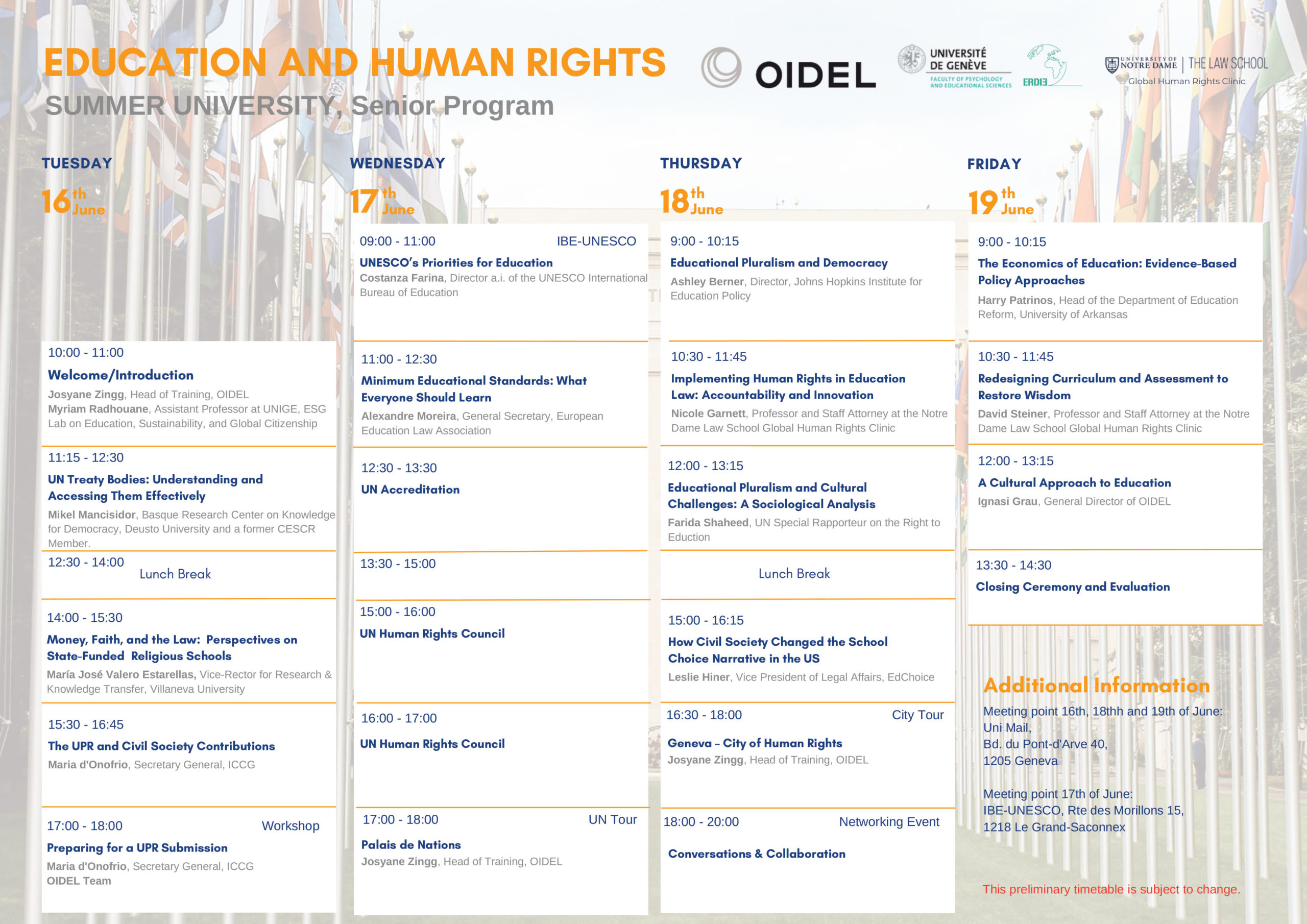

Mr. Ignasi Grau is director of OIDEL and human rights expert on freedom of education and educational pluralism. Grau has authored a number of publications, including the ‘Freedom of Education Index’, ‘Educational Pluralism in the European Union: Report of 10 Educational Systems’ and ‘Towards Understanding the Global Landscape of Educational Pluralism’.
He holds a master’s degree in Policy Development from the University of Geneva, Switzerland, and a double degree in Law and Business Administration from the Universitat Pompeu Fabra, Barcelona, Spain.

Mrs. Ashley Berner is Director of the Johns Hopkins Institute for Education Policy and Associate Professor of Education. She has previously served as the Deputy Director of the City University of New York’s (CUNY) Institute for Education Policy and taught in a Jewish pre-school, an Episcopal secondary school, and an open university in Louisiana.
Harvard Education Press released her newest book, Educational Pluralism and American Democracy: How to Handle Indoctrination, Promote Exposure, and Rebuild America’s Schools, in April 2024.

Mr. Mikel Mancisidor is a former Independent Expert of the UN Committee on Economic, Social and Cultural Rights (2013–2024). A jurist and Doctor of International Relations and Diplomacy (Geneva School of Diplomacy), he serves on the Governing Board of the University of Deusto, where he teaches International Law.
He has contributed significantly to the development of international standards on cultural rights and education, and has been recognised with honours such as the Golden Medal for Human Rights from the Spanish Human Rights League.

Nicole Garnett is Professor of Law at Notre Dame Law School, where she also serves as Associate Dean for External Engagement and directs the Education Law Project. Her scholarly work focuses on education law and policy, religious liberty, and urban development, and she has authored books including Lost Classroom, Lost Community and Ordering the City.
Garnett served as a judicial clerk to Judge Morris S. Arnold of the United States Court of Appeals and later to Justice Clarence Thomas of the U.S. Supreme Court before beginning her academic career. Her scholarship has been published widely in leading international law journals.

Harry Patrinos is Head of the Department of Education Reform at the University of Arkansas, where he focuses on research that informs education policy and practice. He is a specialist in the economics of education, particularly the returns to schooling, school-based management, demand-side financing, and public-private partnerships.
Before his current role, Patrinos spent many years at the World Bank as Senior Adviser in the Education Global Practice, managing regional education teams and contributing to major international education initiatives. He has published extensively — with more than 50 journal articles and co-authored books — and holds a doctorate from the University of Sussex.

David Steiner is a professor of education and Executive Director of the Institute for Education Policy at Johns Hopkins University. He previously served as Commissioner of Education for New York State and on the Maryland State Board of Education, where he led major initiatives in curriculum development and instructional improvement.
His work focuses on designing effective curricula, aligning standards with classroom practice, and improving teaching quality to enhance student learning outcomes. Steiner has authored books and numerous articles on curriculum policy and implementation, and he advises education leaders and policymakers internationally.

María José Valero Estarellas is a tenured professor of law (Profesor Titular) at Universidad Villanueva in Madrid, where she also serves as Vice-Rector for Research and Knowledge Transfer. She holds a law degree from Universidad Pontificia de Comillas – ICADE and earned her doctorate with distinction from Universidad Complutense de Madrid.
Valero’s research focuses on legal frameworks in Europe, examining how laws are developed, interpreted, and applied across different jurisdictions. She has published extensively in Spanish and international legal journals and participates actively in academic conferences and collaborative European research projects.

CEO of EAiD (Ethical Artificial Intelligence for Human Development SL), Amparo Alonso specializes in social leadership and policy advocacy. She bridges ethical technology with sustainable human development, focusing on education and health. She has collaborated with the UNESCO Chair (University of La Rioja) on AI and education workshops, emphasizing “teaching for AI.”
Ms. Alonso holds degrees in Economics and Business Studies and has completed doctoral coursework in Social Economy. Previously, she served as Co-Executive Director of Caritas Internationalis and Director of CI to the UN in Geneva.

Alexandre Magno Fernandes Moreira is a legal scholar and attorney whose research spans education law and human rights, with a major focus on the aims of education. He held positions in several Brazilian government ministries before becoming a leading defender and advocate for homeschooling in Brazil.
Moreira is the author of Curricular Rights: Defining Essential Learning in the Context of Human Rights (2025), which examines how legal and human rights principles can shape curriculum standards and clarify the broader purposes of education. His work bridges law, policy, and pedagogy, contributing to debates on how rights-based frameworks can guide equitable, meaningful, and goal-oriented education internationally.

Ms. Leslie Hiner is Vice President of Legal Policy at EdChoice and Director of the Legal Policy & Education Center (LPEC), where she leads efforts to defend and expand educational choice in the United States of America. An experienced attorney and advocate, she has helped shape key school choice laws, including Indiana’s charter and voucher programs.
Before joining EdChoice, Hiner held senior roles in the Indiana government and helped found one of the state’s first charter schools. She also serves on national education policy councils.

Ms. Elisa Gazzotti is the co-chair of the NGO Working Group on Human Rights Education and Learning and serves as Program Coordinator for Human Rights Education at the SGI Office for UN Affairs. She holds an Executive Master in International Humanitarian Law from the Geneva Academy, as well as a Master’s and Bachelor’s degree in International Relations from the University of Pavia. Previously, she worked with the UN FAO and UNDP on food security and gender equality projects in the MENA region.
She has also served as co-chair of the Human Rights Engagement Task Team of the Global Protection Cluster.